OpenScan.AI is an AI-powered blockchain explorer and Explorer-as-a-Service (EaaS) platform. Our production explorer, XDCScan, serves the XDC Network (chainId 50) today, with support for EVS, Wanchain, and Velas in preparation.
Our mission
Blockchains produce more data than any human can read. Our mission is to make that data understandable: decode what smart contracts actually do, surface the behavior behind raw transactions, and give every network — not just the largest ones — a production-grade explorer with intelligent, real-time insights.
We believe an explorer is public infrastructure. That’s why OpenScan.AI is built on an open-source stack (github.com/OpenScanAI), exposes a Blockscout-compatible REST API v2 with public docs that developers can query without an API key, and is offered to any EVM-compatible chain as a service.
High level overview of OpenScan.AI
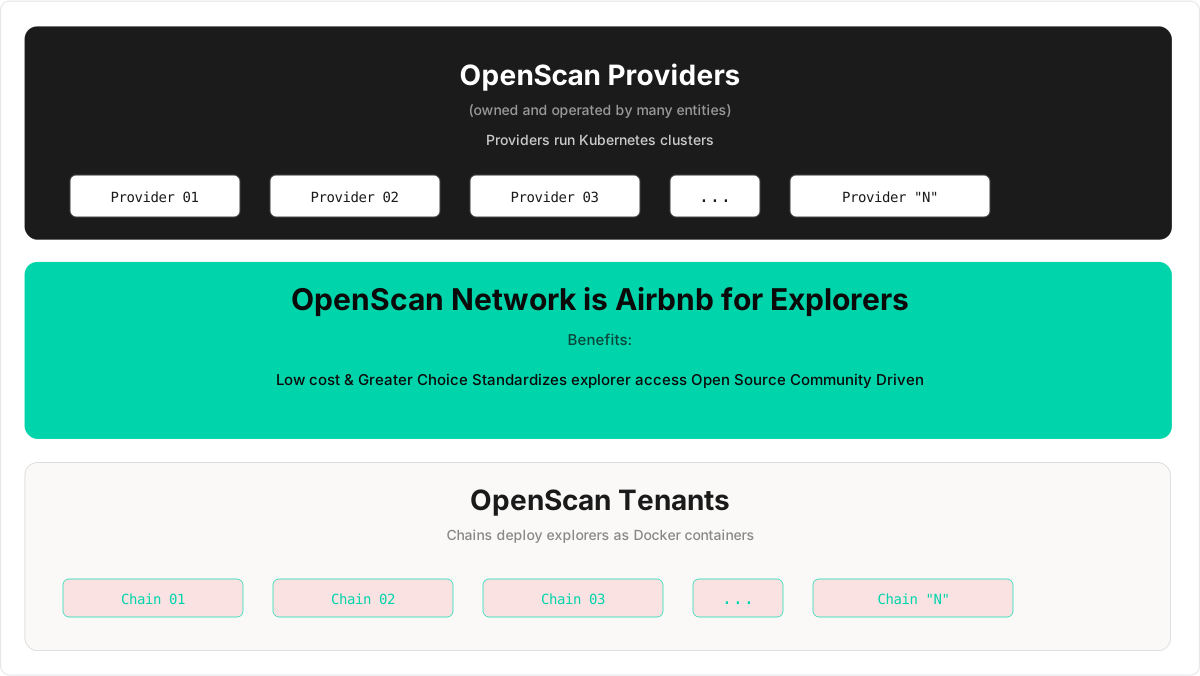
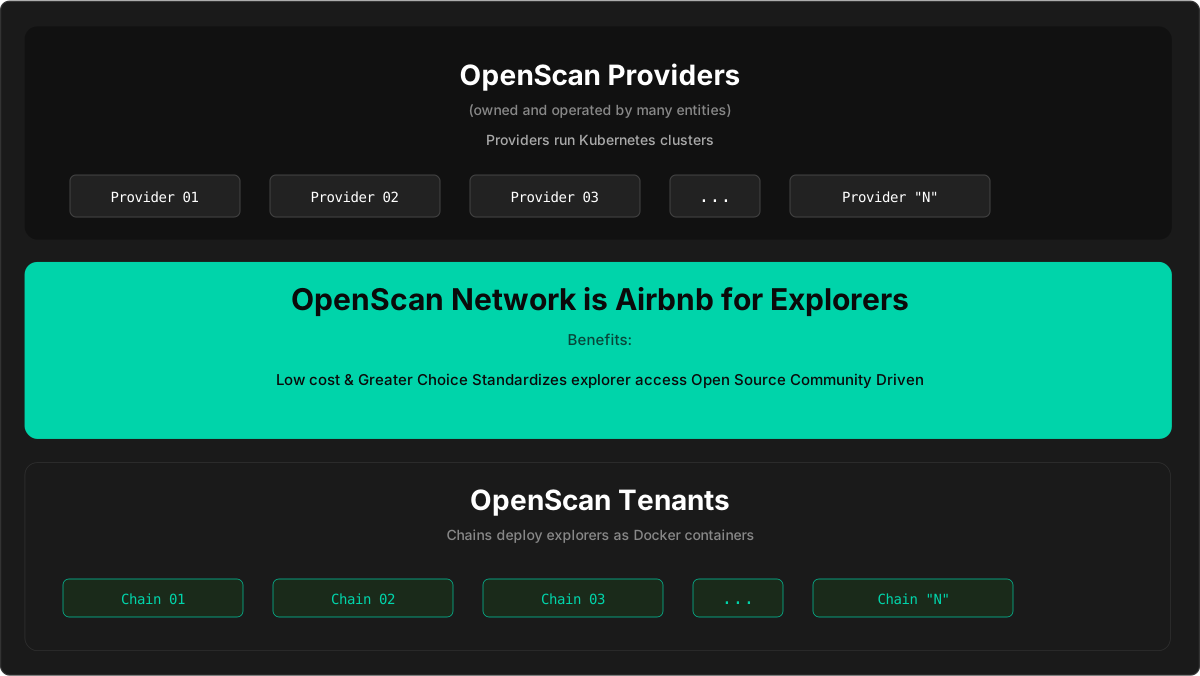
OpenScan.AI comprises key components: the AI analysis engine, which decodes smart contracts, analyzes on-chain behavior, and surfaces predictive insights; the multi-chain indexing layer, which ingests and normalizes data from EVM-compatible L1s, rollups, testnets, and sidechains; and the explorer interface, a fast, localized front end backed by a Blockscout-compatible REST API v2 that developers can query without an API key. Together, they form the foundation of the OpenScan.AI explorer — already live in production for XDC Network at xdcscan.io, and supporting networks such as EVS, Wanchain, and Velas.
Product timeline
We’ve been shipping explorer infrastructure for the XDC ecosystem since 2022 — first as BlocksScan, today as OpenScan.AI. Every milestone below is documented in our blog.
2022 — Foundations as BlocksScan
June: First wave of community-requested explorer upgrades shipped on BlocksScan.
July: Launched BlocksScan UpTime, an AI-based monitoring tool for network health.
August: Announced XDCRPC, a decentralized RPC service for the XDC Network.
November: TradeTrust integration update for trade-finance document flows.
December: Contributed to XDCPay 2.0 (beta) and released BlocksPay, a multi-chain EVM wallet, for beta testing.
2023 — Developer infrastructure
January: Launched an enhanced faucet service for the XDC Network and shipped the XDCPay 2.0 release.
May: XDCRPC in production — guides for fast, cost-effective XDC transactions with web3.
August: Expanded explorer coverage with block-creation and block-detail walkthroughs.
2024 — Explorer V2 and contract verification
March: Shipped Explorer V2, a rebuilt interface for exploring XDC Network data, and iterated on it with community feedback.
April: Automated Hardhat smart-contract verification on the explorer.
October: Published complete verification guides (Standard-Input JSON, multi-part contracts) as the explorer became XDCScan.
2025 — XDCScan tooling, powered by OpenScan
February: Token tooling on XDCScan — deploy a token and add token logos and details directly through the explorer.
Continued hardening of indexing, search, and the Blockscout-compatible API that powers XDCScan today.
2026 — OpenScan.AI
Rebranded from BlocksScan to OpenScan.AI: an AI-powered explorer and Explorer-as-a-Service platform.
Roadmap: deeper AI contract decoding and behavior analysis, predictive insights, and more supported networks — see the roadmap.
How traditional blockchain explorers operate today
Traditional block explorers, such as Blockscout and Routescan, present raw on-chain data as-is: transactions, addresses, and logs rendered with limited context. Interpreting what a contract actually does is left to the user, which demands deep technical expertise and slows down research, debugging, and due diligence. In comparison, OpenScan.AI layers AI-powered decoding and behavior analysis on top of the same data, turning raw transactions into understandable, actionable insight.
Challenges of multi-chain explorer infrastructure
Every new network that wants a quality explorer faces the same challenges: standing up indexing infrastructure, maintaining custom front ends, and keeping up with protocol upgrades — a costly, non-standardized process with a steep learning curve. OpenScan.AI addresses these challenges with its Explorer-as-a-Service (EaaS) model: a modular, open-source stack that can be deployed for any EVM-compatible chain, delivering a production-grade explorer with advanced analytics and multi-language localization in a fraction of the time and cost.
What we build today
- XDCScan — the production OpenScan.AI explorer for XDC Network mainnet and the Apothem testnet, with live blocks, transactions, and contract verification.
- Explorer-as-a-Service — a branded, AI-powered explorer for your EVM chain: indexing, search, analytics, and localization, operated by the team that has run XDC explorer infrastructure since 2022. See supported networks and live network metrics.
- Open developer platform — a Blockscout-compatible REST API v2 and an open-source codebase on GitHub.
Work with us
OpenScan.AI is built in the open by a distributed team of engineers and contributors. The best way to get involved is through GitHub — issues, discussions, and pull requests are all welcome — or by following @OpenScan_Ai. To run OpenScan for your network, request a partnership, or just say hello, reach us through the contact form or the support page.